
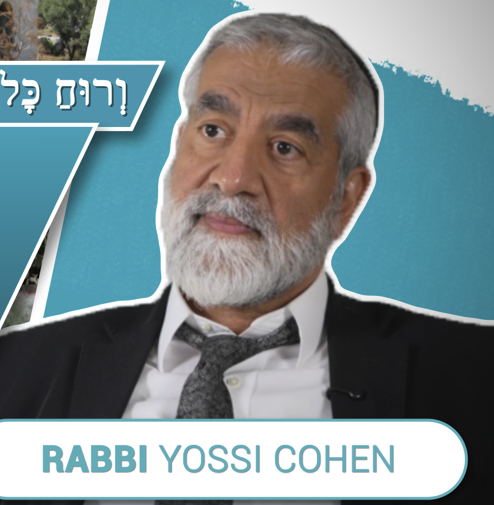
 Nishmas Day 17 - Rabbi Yossi Cohen | How to Leave Mitzrayim
מִמִּצְרַיִם גְּאַלְתָּנוּ, וּמִבֵּית עֲבָדִים פְּדִיתָנוּ
From Mitzrayim You redeemed us, and from the house of slavery You liberated us.
Many mefarshim point out the repetition seen in this pasuk. What is the difference between מִצְרַיִם and בֵית עֲבָדִים — and between redemption and liberation?
There were two dimensions to גלות מצרים.
One was physical — our bodies were enslaved, forced into hard labor.
And on a spiritual level, our nefesh was suppressed.
The very name מצרים comes from the word מצר, meaning narrowness, confinement, restriction. Chazal contrast this with the יָם , the sea, which represents endless expansiveness.
מצרים took infinite potential — physically and spiritually— and squeezed it into a place of limitation.
When Hashem took us out of מצרים , it was a release on every level. Although Klal Yisroel endured later גלויות where our bodies were oppressed and broken, our neshamos were freed forever from מצרים.
Once we left and received the Torah, we were given something that can’t be taken away:
the ability to rise above our circumstances through our machshava, dibur, and maaseh.
That’s why we call it יציאת מצרים.
On a simple level, it should say יציאת בני ישראל ממצרים —that Bnei Yisroel left Mitzrayim.
But יציאת מצרים hints to something deeper:
Not only did we leave מצרים—
מצרים left us.
This posuk of Nishmas reminds us to be grateful not just for being freed physically, but for being given the ability to grow without limits.
When we label people, when we underestimate our potential, when we assume someone “can’t”— we’re slipping back into Mitzrayim.
חייב אדם לראות את עצמו כאילו הוא יצא ממצרים — A person has to see themselves as if they personally left Mitzrayim, recognizing: We are not stuck. We are not defined by limitations.
We have the ability to become far more than we think possible.
We are already free.